

Student Athlete Burnout – What it is and How to Avoid it
Burnout in Athletes with Sarah Borwell and Dr Darren Treasure
The road to success for a student-athlete in the United States is often more complex than it appears. Beneath the surface of trophies and sports scholarships lies a reality that can derail even the most talented athletes: burnout.
At Keystone Sports, we understand that securing a scholarship is only the first step. Player development is what matters most. To explore student athlete burnout in greater detail, we brought together two experts: Sarah Borwell, former WTA player and university placement consultant at Keystone Sports, and Dr Darren Treasure, high-performance psychologist and Director of Mental Performance at the Keystone Sports Performance Program.
Typical Signs of Student Athlete Burnout
A typical burnout sign, according to Sarah Borwell, is that often you can see when the athlete is no longer making decisions for themselves. “For me, as a junior, I didn’t particularly enjoy competing. I found it very stressful. I was anxious most of the time. My parents didn’t force me, but if I had to decide for myself, I probably would have chosen never to play in a tournament.” Still, Sarah went on to play Grand Slams and did very well.
Dr Darren Treasure describes it as a continuum. “If you think about a continuum from thriving to burnout, as you get closer to burnout, you begin to question yourself psychologically about why you are doing it. From a mood perspective, you notice a lot of negative mood, maybe some variability of mood. You begin to question your motivation. That is the first psychological sign.”
Physical Signs of Burnout in Athletes
Dr Treasure explains that there are also physical signs of burnout, but the first thing to understand is that much of what people call burnout is not really burnout – it is overtraining. “On that continuum, overtraining is what most people experience when they cross the physical and physiological threshold.”
True burnout in athletes leads to suppression of the immune system and changes in the hormonal system. You get ill more often. Your body is sending you clear signals that it can no longer cope. The big difference is that you can recover from overtraining with a short rest, but if you reach true burnout, the only solution is to stop completely.
Dr Treasure adds an important insight: “I actually think it probably begins physiologically, because athletes are very good at reframing what they’re feeling. For example, swimmers get very good at saying ‘I’m tired, but that’s the way I’m supposed to feel.’ But what’s really happening is their bodies are breaking down. They’re so mentally tough and used to doing two training sessions a day that they reframe that and say, ‘I’m a swimmer. I’m supposed to be exhausted.’ But eventually that’s unsustainable.”
Individual vs Team Sports and the Burnout Risk
Individual athletes are much more susceptible to burnout than team athletes, explains Dr Treasure. The reason is simple: if you are an individual athlete, whether you are a swimmer, tennis player, or golfer, you can always go and practise more. You can always do an extra hour in the gym or on the track. In a team sport, the structure does not allow for that in the same way; you depend on the group. In addition, the team dynamic acts as a social buffer that protects mental health.
And what about gender? Are there differences between men and women?
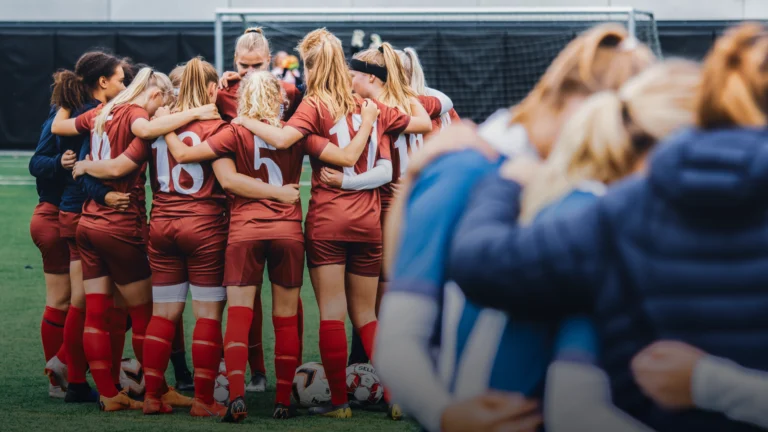
Dr Treasure explains that in his experience, teenage female athletes are at much greater risk. “I think in general – huge generalisation – that female adolescent freshman and sophomore athletes are probably far more disciplined, structured, and have an overachieving mindset than male athletes. I think that sets themselves up for being challenged in this regard, because they are much more likely to embrace a ‘let’s do more’ mentality than male athletes.”
He adds that female athletes tend to operate in much more structured environments during adolescence, making them more susceptible to pressure and, eventually, burnout.
How the First Year at University Affects Mental Balance
Dr Treasure believes many athletes may arrive on campus already overtrained because they have worked so hard during secondary school to get to university. “I think that the freshman year is hard. A lot of things happen in that first semester. I think that the first semester is a tricky one and needs to be managed effectively.”
He notes that athletes who play autumn sports often transition more easily because “they go into a really structured environment. They’re playing and competing right away, so there’s a structure in place, and they just follow that structure.” Spring athletes, however, often struggle in the autumn because they have so much more freedom than they have ever had before.
Sarah adds that the first semester is critical but emphasises a longer-term perspective. “I always say that the third year is when you really see the athlete flourish. By then, they know the coach, they know how the team works, and they have overcome the culture shock of being away from home.”
How to Prevent Student Athlete Burnout
Recovery is not the absence of training; it is a fundamental part of it. At the Keystone Sports Performance Program, we educate athletes that recovery is essential.
Sleep is the most important factor. “That is the single most important thing you can do to help recovery both psychologically, emotionally, and physically,” says Dr Treasure. He is also a big advocate of naps. “I try to encourage every athlete I work with to find an opportunity to get a 20-minute, 30-minute nap in the afternoon. There’s a lot of research around the benefits of that. It’s an absolutely integral part of being the best athlete you can be.”
Darren emphasises that athletes need personalised recovery plans: “It’s understanding what you need. Do you need to switch off? Do you need to be distracted? Is it a nap? Is it going to a movie with my friends? Is it playing video games for a short period of time? Something that can re-energise me and help me recover.” The key is making it part of your daily, weekly, and monthly plan – and actually doing it.
If you don’t have a mental and physical recovery plan, eventually the system will collapse. High performance is about managing energy, not just expending it.
The Importance of Ongoing Support
Sarah Borwell emphasises the importance of ongoing support. “Once you’re in the U.S., the coach won’t really contact the parents to say, ‘Hey, I’m worried about this.’ They deal with it in-house. As a parent, oftentimes you feel alone. That’s why it’s good to come to us at Keystone Sports. We can always talk to the coach and say, ‘Hey, what’s going on? Are the student athletes okay physically? Are they okay mental health-wise? Is there something we can help with?’”
She also stresses that athletes need to learn self-advocacy: “You’ve got to be really good at communicating. If you’ve got a massive exam coming up and you’re really stressed about it, you need to be able to say, ‘Can I take a personal day?’ Some athletes get frightened of having a day off because they don’t want to fall behind, but when your body’s fatigued, you can’t keep going at that speed. One or two days is actually going to help you.”
Keystone Sports Performance Program
The Keystone Sports Performance Program is a unique initiative designed to help student-athletes reach their full potential during their time at university in the United States. The programme is developed by two world-renowned experts: Dr Darren Treasure (Professor of Sports Psychology and Mental Performance Consultant) and Clive Brewer (Physical Performance Expert). The programme offers comprehensive guidance covering athletic training, mental resilience, nutrition, sports medicine, and strategic recovery.
Through the digital platform, athletes gain access to professional tools and methodologies that enable them to optimise their performance and wellbeing. This is a programme to help prepare them to succeed not only on the field of play, but also in their studies and future professional careers.
Final Advice for Athletes
Sarah Borwell emphasises balance and friendships. “I’ve mentioned social life a lot and for me, what kept me going was my friends and knowing that I had an outlet from that.”
She also advocates quality over quantity in training. “When I was on tour, we’d have junior tennis players train with us and they would say, ‘Yeah, I play four hours a day.’ But training at our intensity for ten minutes was too much for them. I’d much rather someone train for an hour a day with high intensity quality than dragging it out for another three hours.”
Her practical advice: “If you want to go out to the cinema with your friends, do fun stuff like that. You’re going to cultivate really good friendships and relationships through sport. You’re going to have these friends for life.”
Dr Darren Treasure: “Don’t forget that rest and recovery are integral to being an elite-level athlete. If you do not have a mental recovery plan, the system will collapse sooner or later.”
As Sarah and Dr. Treasure have highlighted, student athlete burnout is a real but preventable threat. The key lies in treating the mind with the same rigour as the body. At Keystone Sports, our commitment goes beyond getting a signature on a scholarship contract. Through our Performance Program, we equip young people with the psychological and physical tools they need to thrive at university in the U.S.
Share this article:
More related articles
Wellbeing and mental health in student athletes
Mental health in sports is an important topic receiving more and more attention today due to its impact on overall wellbeing. Immie from Keystone Sports Germany explains further the various aspects of mental health in student athletes.

The Keys to Success During the College Sports Season
Learn differences between in-season and out-of-season and what it takes to end your competitive year successfully! Get the best tips and guidance in our article by Immie Cowper from Keystone Sports Germany.
Why You Should Play Summer League Football in the USA
The Summer League is in full swing with matches and tournaments happening all over America. But what is the Summer League, and what are the benefits of participating in it as a university football player?